
An apparel colorway matrix records the intended color of each component in every garment version. It gives the brand and supplier a common place to check body panels, sleeves, rib, piping and closures. A name such as navy does not identify every component or establish an approved physical shade.
Identify the style and document revision
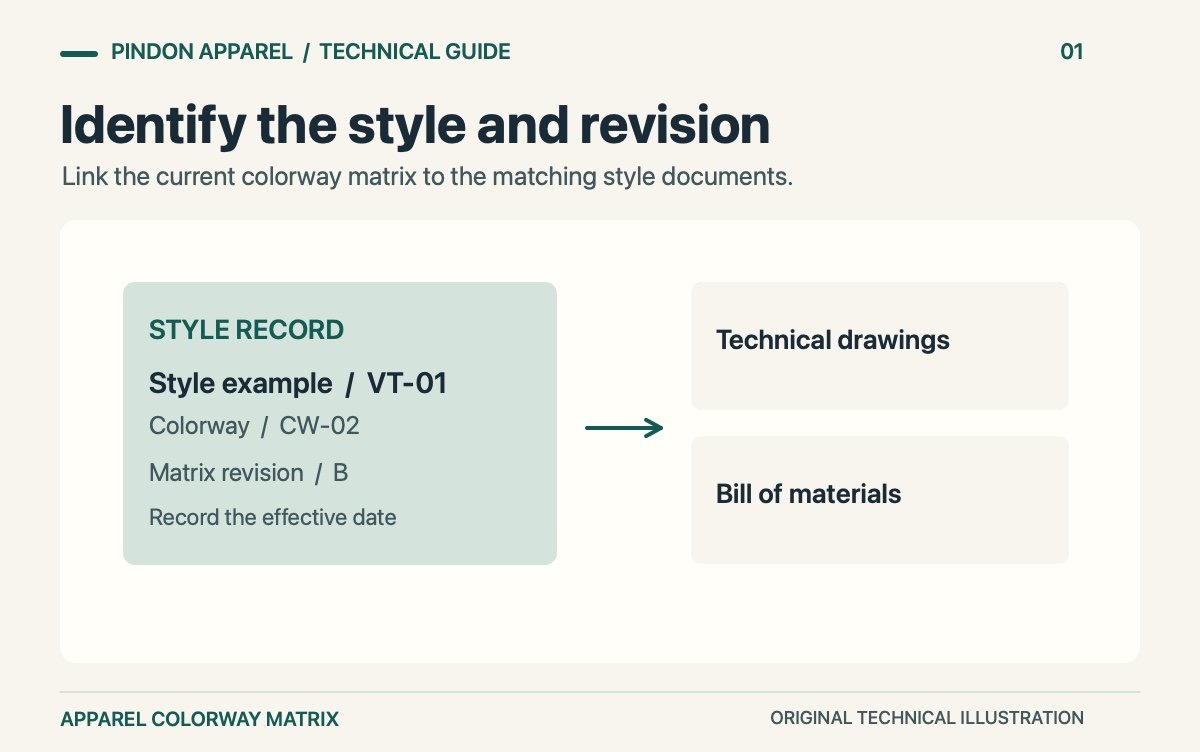
Record the style code, colorway code, revision and date. Connect the matrix to the current technical drawings and bill of materials. Keep a clear change log so an older instruction is not mistaken for the current version.
Use one row per component rather than placing one overall color name above a sketch. This makes contrast sleeves, striped rib, hood lining and visible zipper tape easier to discuss. Keep quantity planning in a separate, linked size-and-color order table so color instructions do not get confused with order totals.
Use a component-by-component template
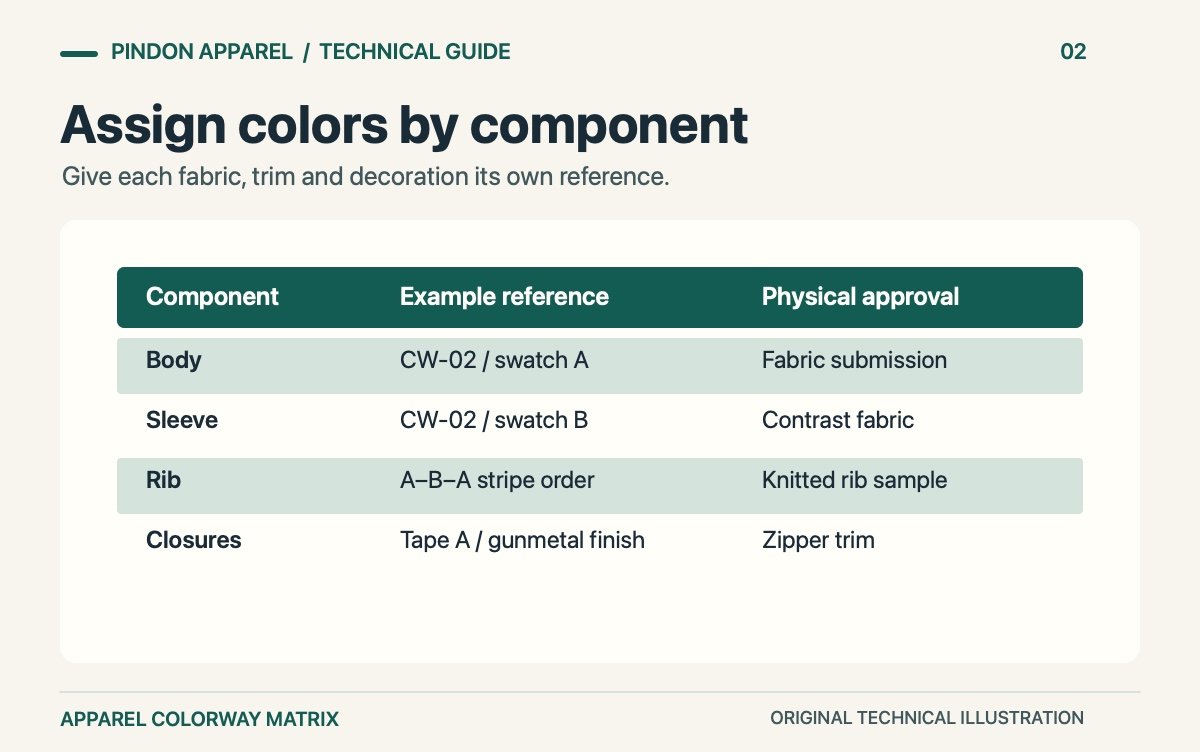
| Component | Reference | Approval record |
|---|---|---|
| Body | Physical swatch and reference code | Submission ID, status and date |
| Sleeves | Matching or contrast reference | Relevant material submission |
| Rib | Solid color or stripe sequence | Reviewed rib sample |
| Piping or binding | Reference and placement | Reviewed trim sample |
| Closures | Zipper tape and hardware finish separately | Component approval |
| Decoration and labels | Artwork version and color references | Reviewed submission |
Mark unused components not applicable and unresolved cells to confirm. Add any parts missing from this working template. If a component is the same across several colorways, state that explicitly rather than leaving the later columns blank.
Separate digital targets from physical approvals
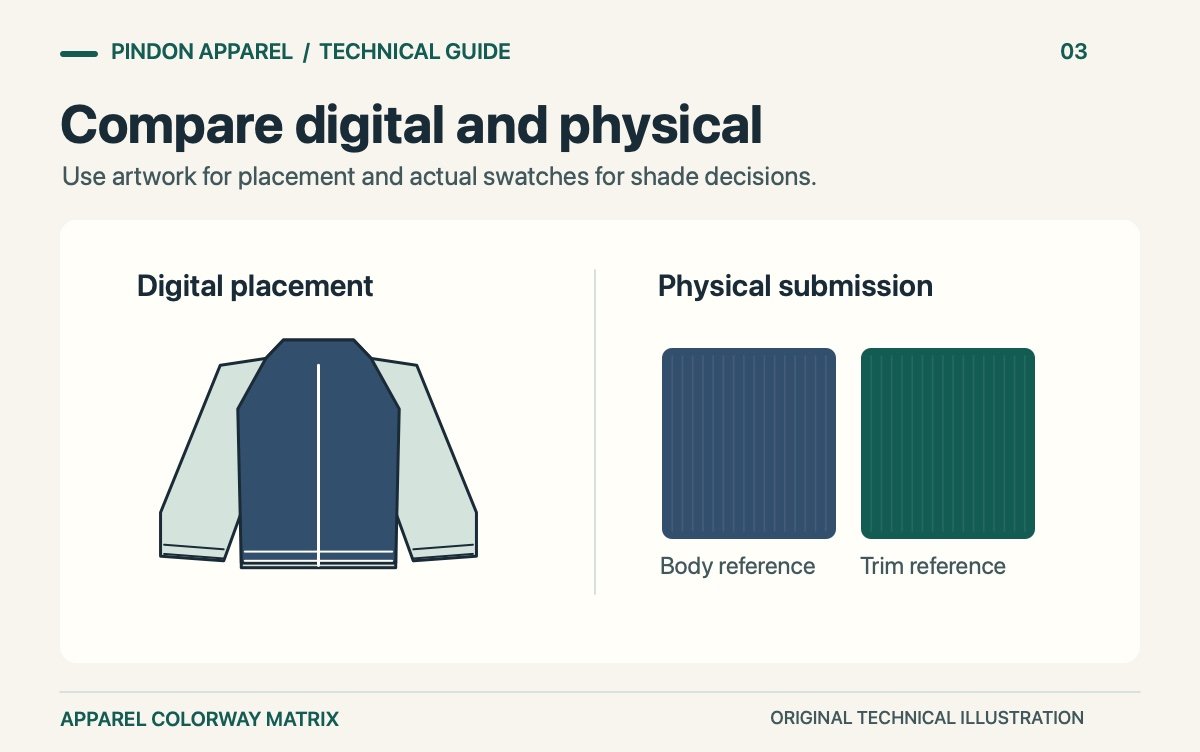
A digital illustration shows where colors belong, but photographs, lighting and displays can change their appearance. Use an agreed physical reference and the relevant submission when color approval is required. Review coordinating materials together and state whether a trim should match or contrast.
Do not assume that a body fabric approval also approves rib, thread or a plastic trim. Identify the material and submission being reviewed. If a physical reference is unavailable, record what remains provisional and agree the next approval step with the supplier.
Check a complete colorway
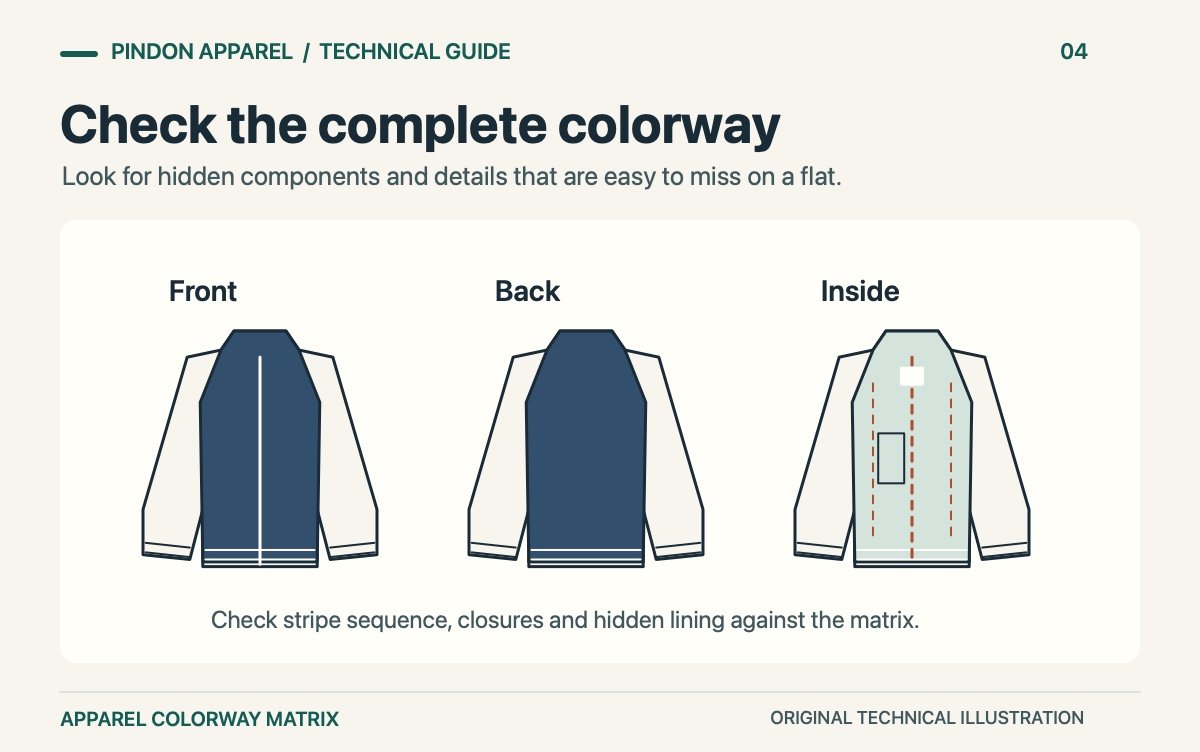
Compare front and back drawings with every row, including hidden contrast areas and hood lining. Mark left and right placements, rib stripe sequence and hardware finishes explicitly. Review the inside of a jacket as well as the exterior if the lining, pocket bags or labels carry different colors.
Explore our piped varsity jacket design concept and half-zip hoodie design concept as starting points for customization discussions. Final materials and construction need project-specific confirmation.
Record decisions and revisions
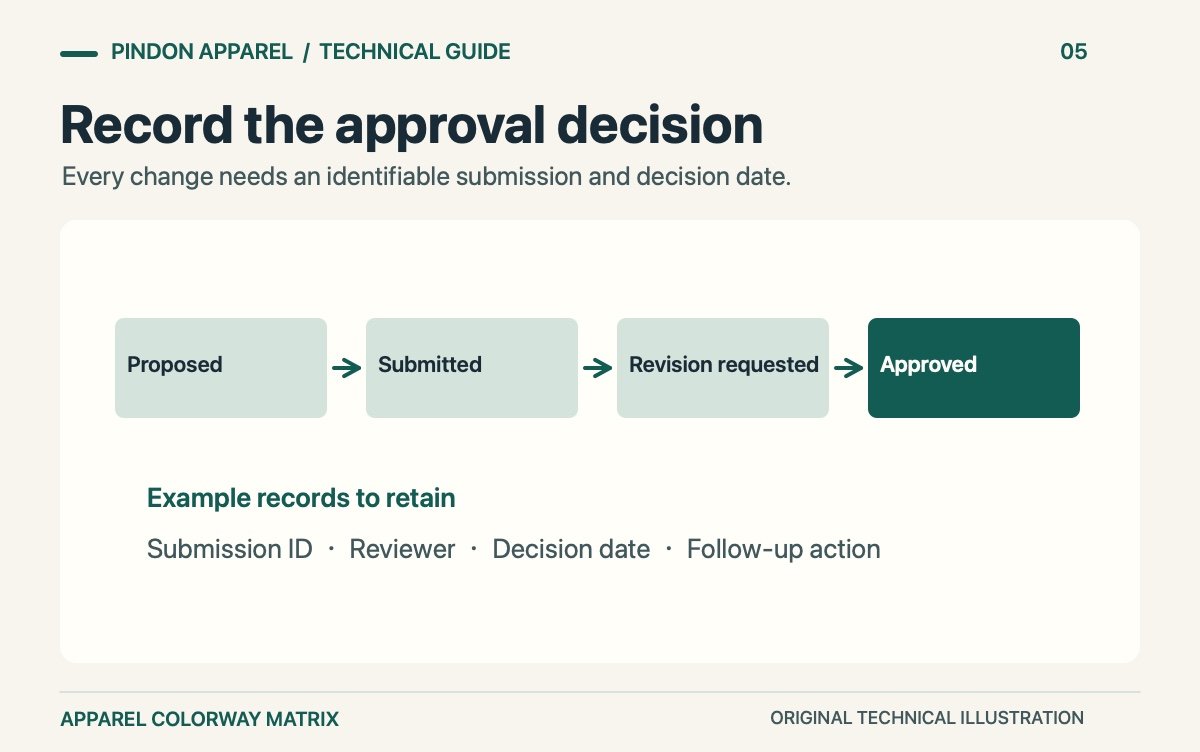
Use proposed, submitted, revision requested and approved statuses, with submission identifier, reviewer and decision date. Recheck related trims when the body reference changes. Send the complete revised matrix and request acknowledgement of the current version.
A useful handoff includes the current matrix, marked drawings and a short list of changes. Keep superseded versions out of the working attachment set, while retaining them in your own revision history. An unresolved cell should remain visible until a decision is recorded.
Discuss your apparel brief
Send your style drawing, component matrix and available references to Pindon Apparel. Fabric options, feasibility, quantities, pricing and timing are subject to individual confirmation. WhatsApp: +8613192081148 | Benny