Fabric GSM measures fabric mass in grams per square meter. It helps clothing brands compare material weight, but it cannot tell you on its own how a garment will fit, feel, or perform. This fabric GSM guide explains how to turn a weight target into a useful sourcing brief for custom T-shirts and hoodies.
What does GSM mean in clothing?
GSM describes the mass of a measured area of fabric. A 240 GSM fabric has a mass of 240 grams per square meter under the measurement conditions used. It is not the weight of a finished T-shirt: garment size, pattern shape, trims, decoration, and fabric consumption also affect finished weight.
Use GSM to compare similar fabrics. Comparing two cotton single jerseys is more useful than comparing a jersey with a brushed fleece only by their weight numbers. Different yarns, knit structures, fiber blends, and finishes can produce different results at the same GSM.
How to choose T-shirt fabric weight
Begin with your intended use and silhouette. A summer layering tee, a fitted promotional shirt, and a structured oversized streetwear tee may need different fabrics. The following are starting points for sampling, not fixed industry definitions or guarantees of performance.
- Around 140–180 GSM: worth sampling for lighter everyday or layering tees. Check opacity, drape, and seam appearance in the intended color.
- Around 180–220 GSM: a useful comparison group for a more substantial everyday tee. Assess hand feel and recovery rather than assuming every fabric in this range behaves alike.
- Around 220–280 GSM: worth considering for heavier tees and structured silhouettes. Confirm that the chosen material still gives the comfort and movement your customer expects.
Ask for swatches or sample garments that bracket your target. A slightly lighter material with the right construction may suit your design better than a heavier option chosen for its number alone.
How to choose hoodie fabric weight
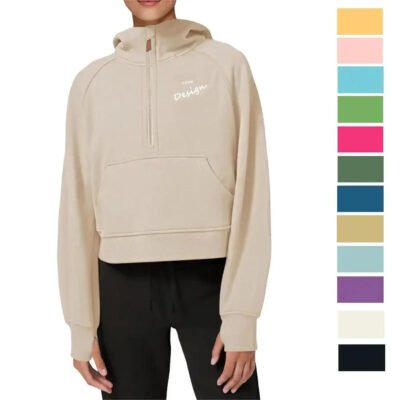
For hoodies, discuss both weight and the inside surface. French terry with visible loops and brushed fleece can feel different even when their GSM is similar. Rib, hood lining, garment wash, and overall fit also affect the finished product.
- Around 250–320 GSM: a starting point for sampling lighter hoodies or layering styles.
- Around 320–400 GSM: a comparison range for substantial everyday hoodies, depending on construction and fiber blend.
- Above 400 GSM: a possible direction for heavier silhouettes. Review bulk at seams, hood weight, drying behavior, and wearer comfort before approving.
These ranges overlap in practice. Weight alone does not establish warmth, quality, or suitability for a particular season. Evaluate the actual sample in the conditions your customers will use it.
Five specifications to send alongside GSM
1. Fiber composition
State the required fiber blend, rather than writing only “cotton feel.” If composition is still open, ask for alternatives and review their hand feel, care requirements, and test results. Any certification or recycled-content claim should be supported by documentation for the material supplied.
2. Fabric construction and surface
Specify single jersey, interlock, French terry, brushed fleece, or the intended alternative. Provide a reference swatch when possible. Identify whether you want a smooth face, visible loopback, a brushed interior, or a particular washed appearance.
3. Weight tolerance and measurement stage
Agree the target GSM, acceptable variation, and when the weight is measured. Clarify whether the specification applies to finished fabric before cutting or another agreed stage. Do not leave tolerance decisions until inspection.
4. Wash performance and dimensions
A heavy cotton fabric can still change dimensions after washing. Agree a wash and drying procedure, the number of cycles, and acceptable dimensional change. Measure the finished sample consistently before and after testing. Cotton Incorporated’s technical guidance describes how processing and knit structure can affect fabric weight and shrinkage.
5. Color, decoration, and fit
Assess the intended colorway and decoration on the selected material. Check print coverage, embroidery behavior, puckering, and placement as relevant to your design. Review the complete garment: a fabric swatch cannot show how the neck, shoulders, cuffs, and hem will behave together.
A practical fabric approval process
- Define the customer, climate, silhouette, and target hand feel.
- Compare two or three clearly labeled material options.
- Confirm composition, construction, finish, target GSM, and tolerances.
- Develop a garment sample in the selected fabric.
- Review fit, appearance, decoration, and agreed wash performance.
- Record the approved material reference and retain a comparison sample for production checks.
Put the final decision in your clothing tech pack checklist. A written specification helps the brand, material supplier, and manufacturer work from the same requirements.
Frequently asked questions
Is higher GSM always better quality?
No. GSM measures mass per area. Quality also depends on whether the fabric and construction meet the product’s requirements, including workmanship, durability, comfort, and appearance.
Can I calculate GSM from a finished garment’s weight?
Not reliably from total weight alone. You would also need to account for the fabric area, different components, trims, and decoration. Ask your supplier for fabric specifications and an agreed measurement method.
Will the same GSM feel identical from two suppliers?
No. Fiber, yarn, structure, and finishing can differ. Compare physical samples and documented specifications before selecting a material.
Choose fabric for your next Pindon project
Explore Pindon’s custom T-shirt options, then send your fabric brief and reference samples to discuss sourcing and sampling. Include your target GSM, composition, fit, quantities, and intended market so the project can be evaluated against clear requirements.
Technical reference: Cotton Incorporated: Proper Processing of 100% Cotton Knit Fabrics.