Specify two measurements for a custom jogger waistband: the width when it lies flat without tension, and the width it reaches under an agreed extension procedure. Relaxed width helps define how the waistband sits during wear. Extended width helps determine whether the opening can pass comfortably over the hips. A fit trial and a recovery check show what the two measurements leave out.
Measure the relaxed waist flat
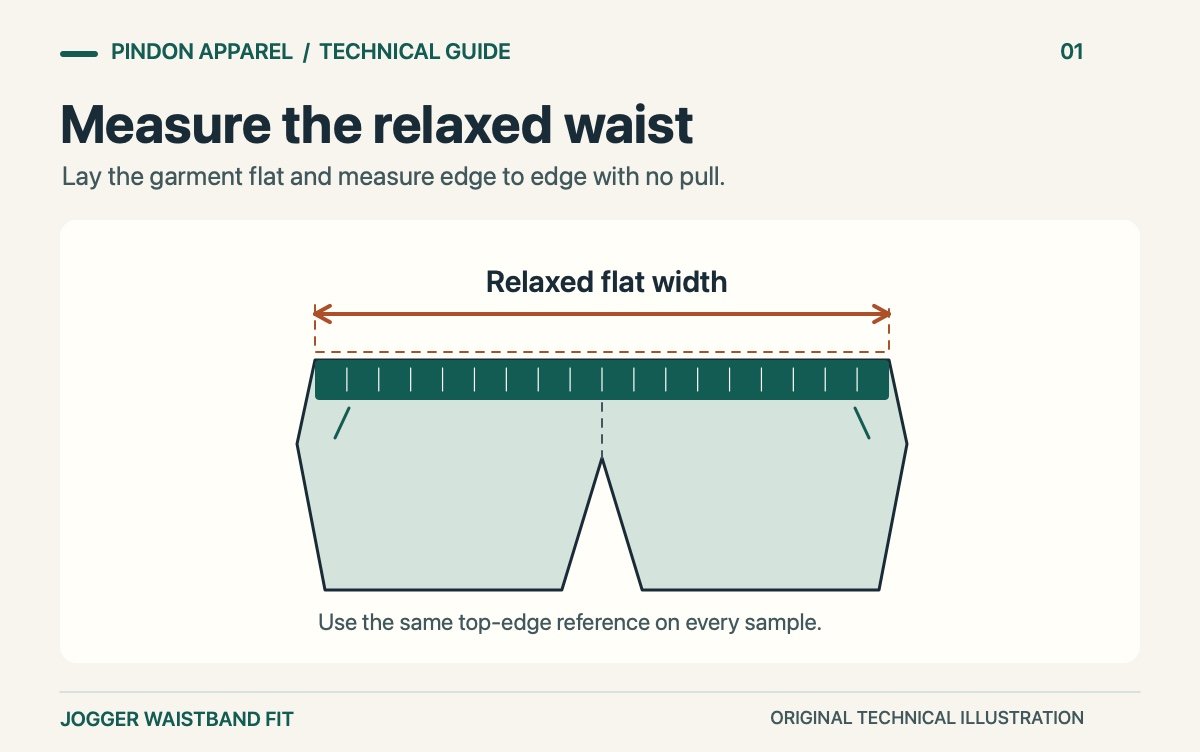
Close any fastenings and leave the drawcord loose. Lay the jogger flat with the waistband smooth and the front and back top edges aligned as your drawing specifies. Measure across the top edge at the agreed endpoints without pulling. State that the result is a flat half-width in the size chart, and use the same method for each sample. If the design has a contoured waistband, draw the exact points and direction of measurement.
Define how to measure the extended waist
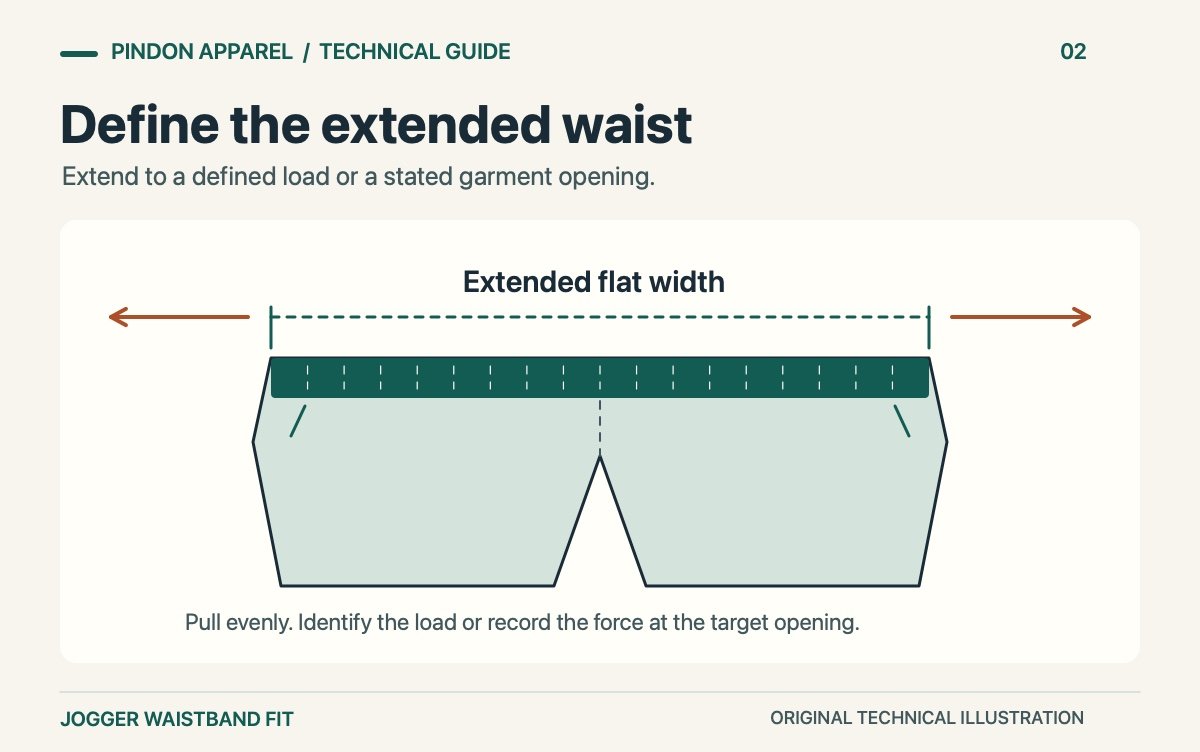
Ask the supplier to agree on either a specified load at which to measure the opening or a target opening at which to record the force. Document the grip points, how to pull evenly, any hold time and whether the garment is new or washed. Hand stretching to a subjective maximum makes it hard to compare samples or resolve differences across sizes. Check that the required opening works on the intended wearer and that the waistband can pass over the hips without undue force.
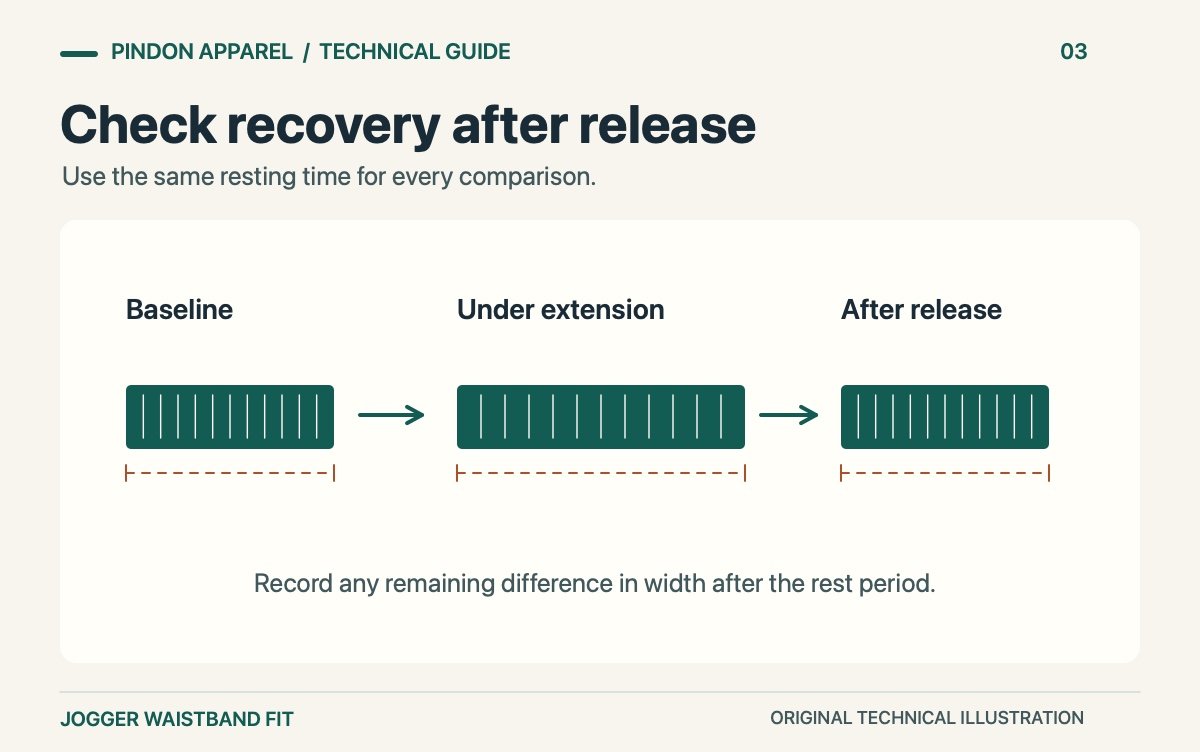
Release the waist and check recovery
After releasing the waistband, let it rest for the agreed interval, then measure the relaxed width again. Record any remaining change along with observations such as rippling, elastic twist or broken stitches. Use the same extension cycles and resting conditions when comparing alternatives. For a wash review, agree on care and drying conditions, and compare samples at the same stage.
ASTM publishes a method for measuring the elongation of narrow elastic fabrics. If you need a formal elastic test, identify the test material and method with the supplier or lab. Evaluate the completed waistband separately because the fabric casing and seams also affect its behavior. ASTM D5278/D5278M scope.
Review the elastic and its construction together
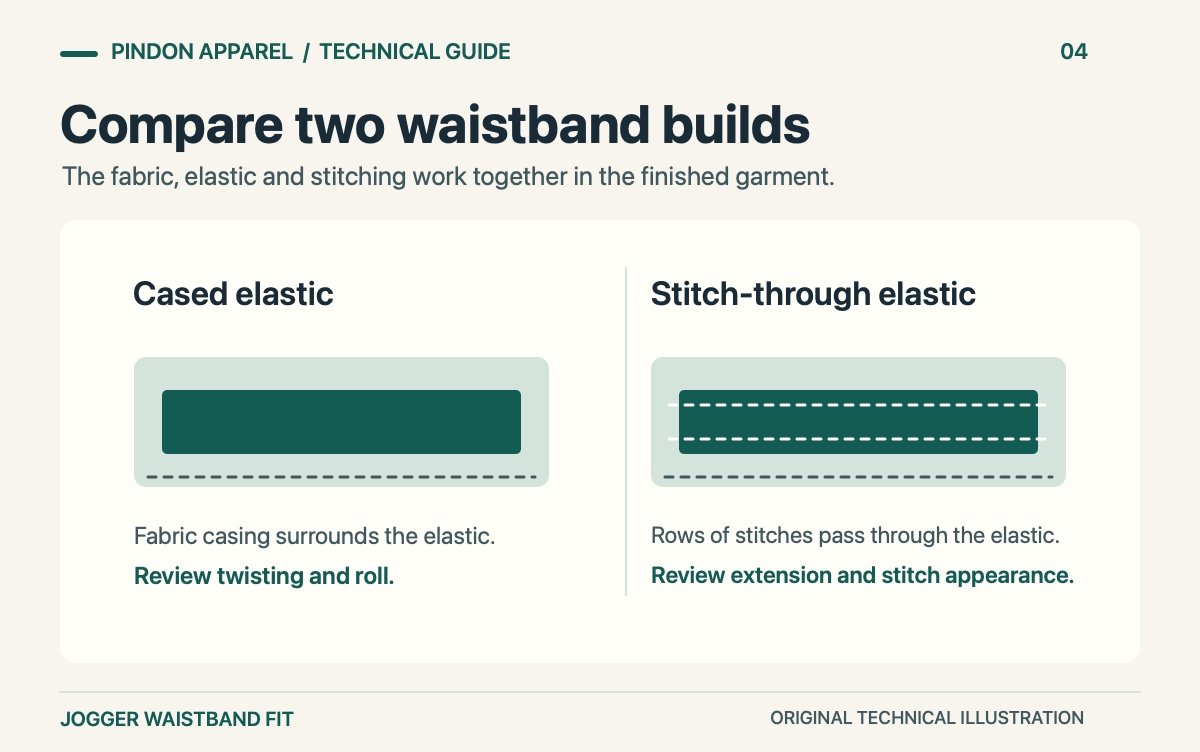
Compare a cased elastic that can move within the fabric channel with an elastic secured through the waistband by rows of stitching if either construction could suit your brief. On a cased sample, check for rolling or twisting. On a stitch-through sample, extend the waistband and inspect the appearance and integrity of the stitch lines. Try the same movements in both garments and check the waistband standing, seated and in a squat. Coats’ technical bulletin explains why seam stretch, bulk and softness all matter when garments move and sit against the skin. Coats technical guidance on stretch seams.
Put both measures in the sampling brief
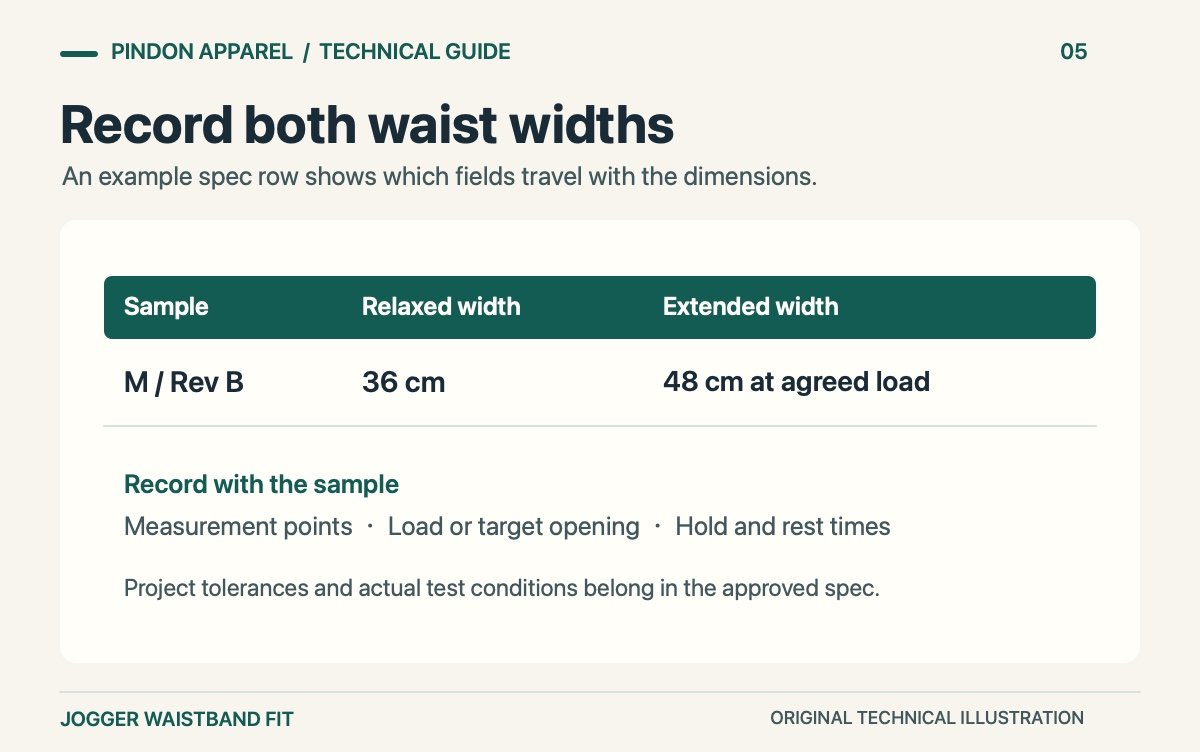
For example, a hypothetical size M specification could show 36 cm relaxed and 48 cm at the agreed load. The actual brief would also state the load, measuring points, hold time, rest period, care condition and tolerances. Review at least the sizes most likely to expose fit or entry problems and agree which sizes need physical samples. Store the elastic reference and the approved sample revision with your clothing tech pack.
Frequently asked questions
Does a drawcord remove the need for an extended waist measurement?
The drawcord adjusts the fit after the wearer puts the garment on. The underlying waistband opening still needs to pass over the hips when the drawcord is loose.
Can two waistbands with the same relaxed width feel different?
Yes. The force required to extend the elastic, the width and construction of the band, and the fit over the body can change how the same relaxed width feels. Compare complete samples using the intended materials.
Discuss your custom jogger sample
Explore Pindon Apparel’s custom pants range and send your jogger development brief with the intended fit, size range, fabric direction, waistband drawing and quantities. Dongguan Pindon Apparel Co., Ltd. can discuss project-specific sampling, construction and quotation requirements.