A varsity jacket lining specification should describe the inside of the jacket as clearly as the outside. A front-and-back fashion sketch may show the silhouette and artwork, but it can leave lining coverage, internal pockets, labels and the relationship between decoration and lining unresolved. A separate interior brief gives the brand and supplier a practical starting point for sampling.
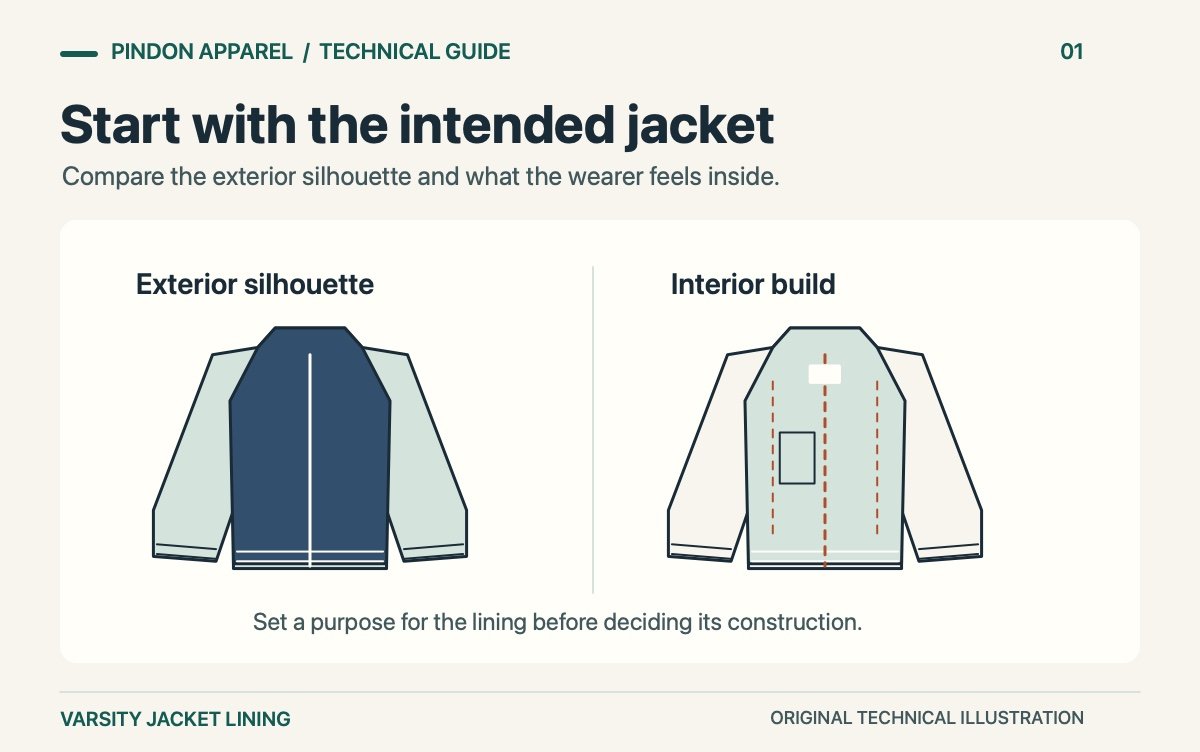
Start with the intended jacket design
Identify the style code, current technical drawing, sample size and revision date. Explain how you intend the jacket to be worn and which interior details matter to your customers. State whether you are requesting a lined design or asking the supplier to discuss lining options.
Do not choose a material from appearance alone. Record the material reference and any confirmed composition or weight only when you have reliable information. If a reference is still being sourced, write to confirm and request a physical swatch rather than inventing a specification.
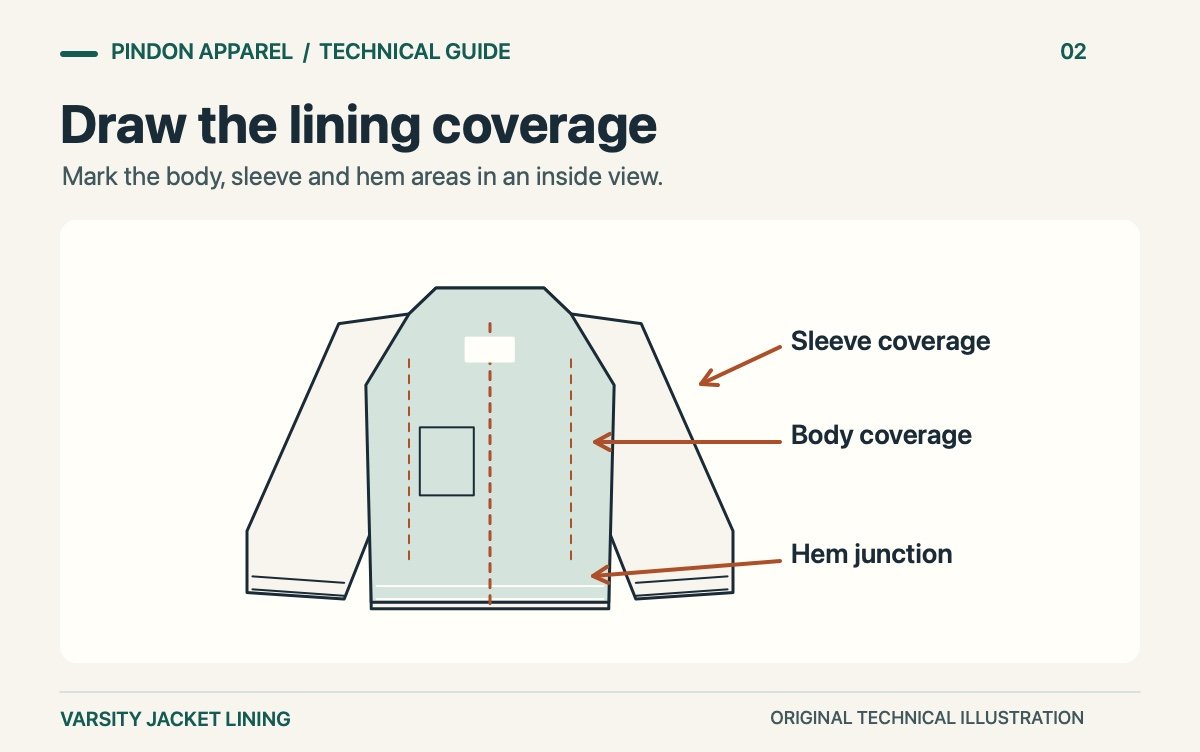
Define lining coverage with an interior drawing
Show the body, sleeves and any separate facing areas. Label which material belongs to each area and where contrasting colors are intended. If the design includes padding or quilting, describe the intended arrangement as a request for feasibility review; do not assume that a visual mockup establishes a workable construction.
Include a simple open-jacket drawing or annotated reference photograph. Use arrows that point to a specific panel, seam or opening, and connect each callout to the matching entry in the bill of materials. Ask the supplier to flag any unclear junction before making the next sample.
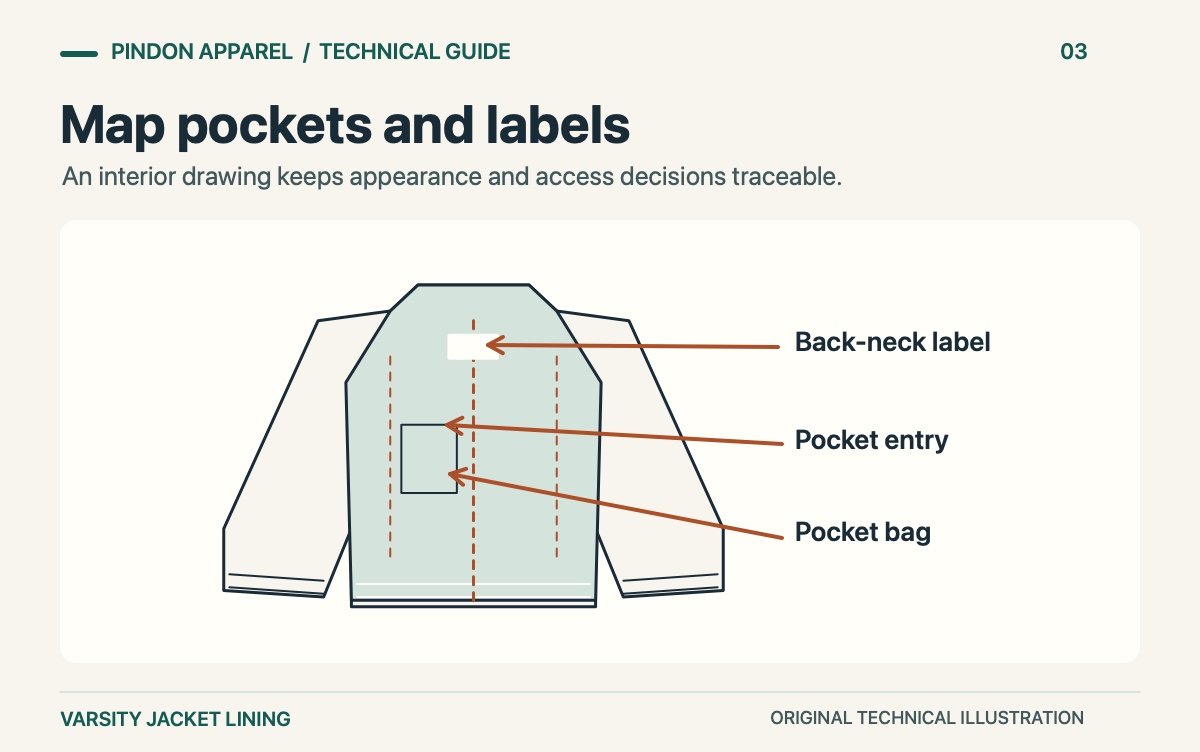
Specify internal pockets and label locations
- Pockets: identify the wearer’s left or right side, opening direction, intended size and closure request.
- Labels: mark the main brand label, size label and proposed care-label position separately.
- Hanging loop: show placement and the intended appearance if the design includes one.
- Decoration: identify any interior print or label artwork with its current file version.
Keep pocket measurements linked to named reference points. A note such as inside pocket on the left is incomplete unless it states whose left and where the opening should sit. Label artwork and care information also need their own review; a placement drawing does not approve their wording.
Discuss the relationship between lining and decoration
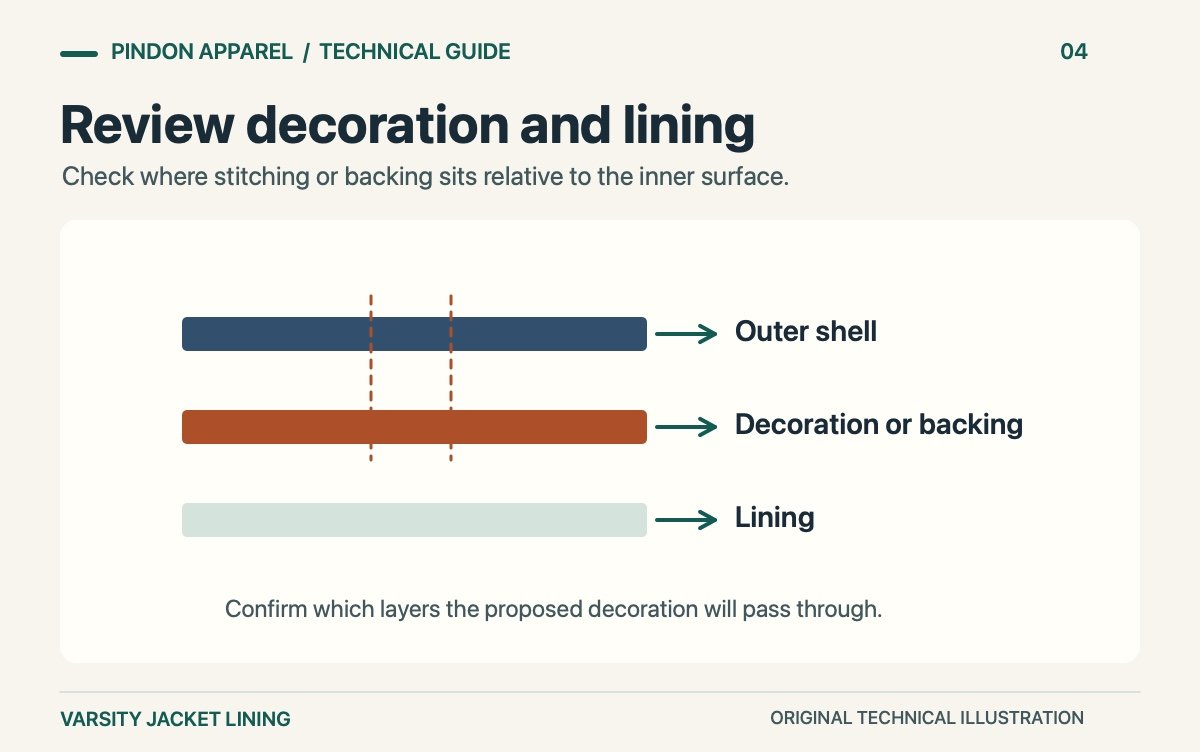
If the jacket has embroidery, patches or other decoration, ask how the proposed construction will affect the inside. Clarify whether visible stitching or backing is acceptable in the intended finished appearance. Have the supplier explain the proposed method and show it on the sample rather than assuming that all decoration can be hidden by the lining.
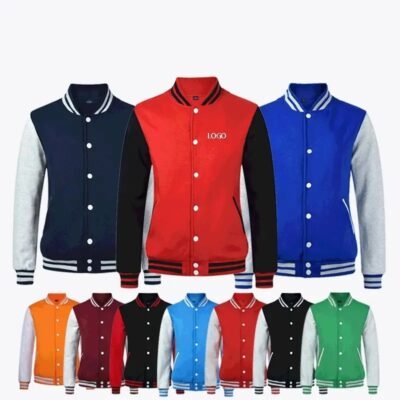
Use our charcoal piped varsity jacket design concept as an exterior starting point, then prepare a separate interior drawing for your own project. The concept image is not confirmation of a particular lining material or internal construction.
Review the physical sample inside and outside
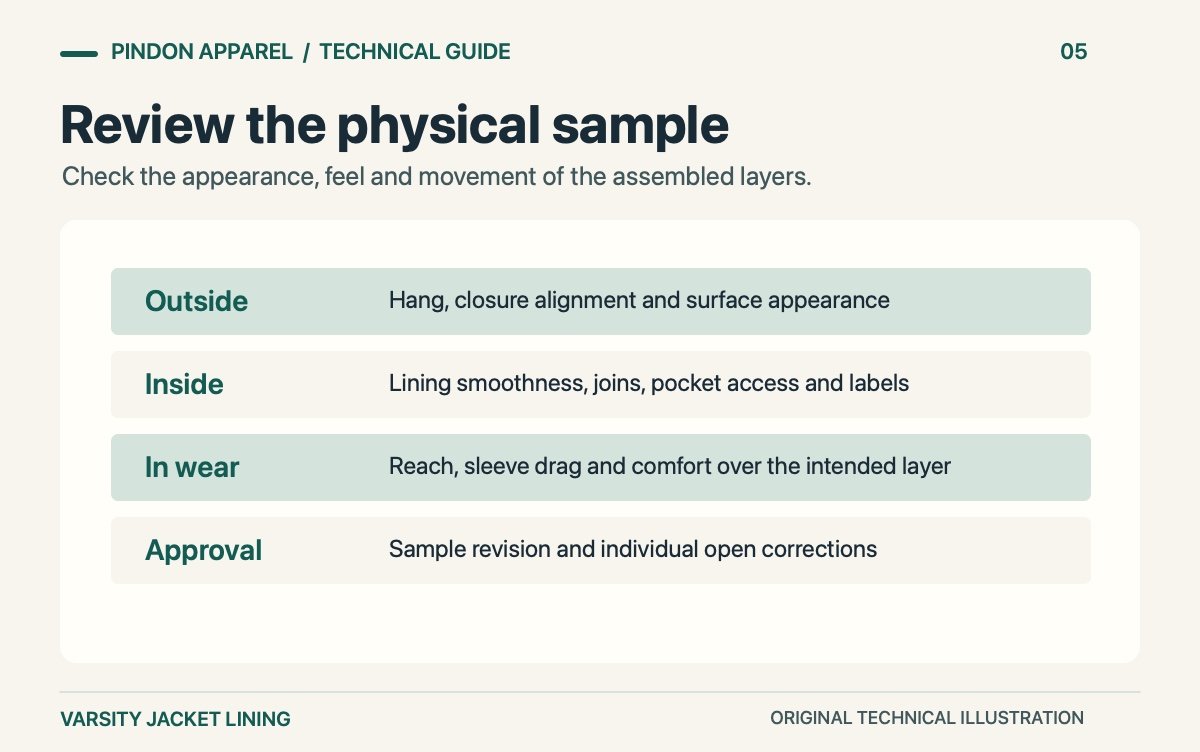
Check that the sample matches the latest interior drawing and material references. Open each internal pocket, inspect label orientation and look at seam junctions around the front opening, hem and cuffs. Turn the sleeves as needed to understand the interior appearance. Record what you observed with clearly identified photographs and written comments.
Assess the intended fit and movement on the actual sample; photographs alone cannot confirm comfort. Material performance, durability, care instructions and any required testing need project-specific evaluation. An attractive lining photograph is not evidence of those properties.
Keep the approval record specific
Identify the sample round and list any accepted details, requested changes and unresolved questions. If the lining material or pocket construction changes, check the revised sample against the updated brief. Separate a visual approval from a material or performance approval so the scope of each decision stays clear.
For related planning tools, read our apparel colorway matrix guide and garment sample photography checklist.
Discuss your custom varsity jacket
Send Pindon Apparel your exterior and interior drawings, material references and sample questions. Lining options, manufacturing feasibility, quantities, prices and timing must be confirmed for the individual design. WhatsApp: +8613192081148 | Benny